Discover the sourdough vs yeast bread recipe differences, ingredients, baking methods, nutrition, and step-by-step recipes for both breads.
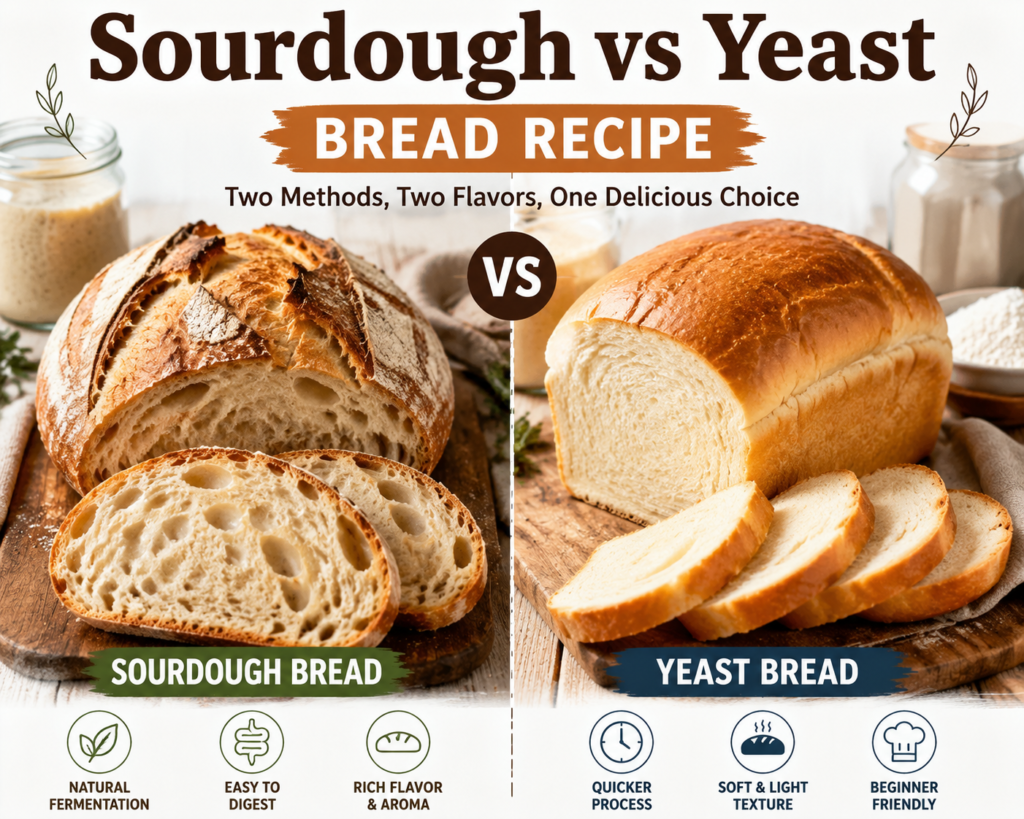
Sourdough vs Yeast Bread Recipe
If you’ve ever wondered about the difference between a sourdough vs yeast bread recipe, you’re not alone. Many home bakers want to know which bread is easier to make, healthier to eat, and tastes better. While both types of bread share similar basic ingredients—flour, water, and salt—the way they rise is completely different. Sourdough relies on a naturally fermented starter, while traditional bread uses commercial yeast for a quicker rise.
A sourdough vs yeast bread recipe comparison helps you decide which loaf best fits your baking style. Sourdough offers a rich tangy flavour, chewy texture, and longer fermentation, whereas yeast bread is lighter, softer, and ready in just a few hours. Both have their own advantages, making them popular choices for beginners and experienced bakers alike.
This guide compares every important aspect of a sourdough vs yeast bread recipe, including ingredients, preparation, baking techniques, nutrition, storage, and complete step-by-step recipes for both breads. Whether you’re baking for breakfast, sandwiches, family dinners, or special occasions, you’ll find everything you need right here.
Recipe Overview
| Item | Sourdough Bread | Yeast Bread |
|---|---|---|
| Prep Time | 30 minutes (+12–18 hrs fermentation) | 20 minutes |
| Cook Time | 40 minutes | 30 minutes |
| Total Time | 13–19 hours | 2.5–3 hours |
| Servings | 12 slices | 12 slices |
| Calories | 170 per slice | 155 per slice |
| Difficulty | Intermediate | Beginner |
Why You’ll Love This Sourdough vs Yeast Bread Recipe
- Learn two popular bread recipes in one guide.
- Perfect for beginners deciding which bread to bake.
- Understand the flavour, texture, and nutrition differences.
- Includes practical baking tips and troubleshooting advice.
- Great for sandwiches, toast, soups, and family meals.
- Helps you choose the best bread for your schedule.
- Uses simple ingredients found in most kitchens.
Ingredients
Ingredients for Sourdough Bread
| Ingredient | Quantity | Purpose | Substitute |
|---|---|---|---|
| Bread Flour | 500g | Structure | All-purpose flour |
| Active Sourdough Starter | 100g | Natural leavening | None |
| Water | 350ml | Hydration | Filtered water |
| Salt | 10g | Flavour | Sea salt |
Ingredients for Yeast Bread
| Ingredient | Quantity | Purpose | Substitute |
|---|---|---|---|
| Bread Flour | 500g | Main ingredient | All-purpose flour |
| Instant Yeast | 7g | Rising agent | Active dry yeast |
| Warm Water | 320ml | Dough hydration | Milk |
| Sugar | 1 tbsp | Feeds yeast | Honey |
| Salt | 10g | Flavour | Kosher salt |
| Butter | 30g | Soft texture | Olive oil |
Equipment Needed
- Mixing bowls
- Digital kitchen scale
- Measuring cups
- Dough scraper
- Dutch oven (for sourdough)
- Loaf pan (for yeast bread)
- Kitchen towel
- Proofing basket (optional)
- Oven thermometer
- Cooling rack
How to Make Sourdough vs Yeast Bread Recipe
Sourdough Bread
Step 1 – Feed the Starter
Feed your sourdough starter 4–8 hours before mixing the dough until bubbly and active.
Step 2 – Mix Ingredients
Combine flour, water, starter, and salt until no dry flour remains.
Step 3 – Rest the Dough
Allow the dough to rest for 30 minutes.
Step 4 – Stretch and Fold
Perform stretch-and-fold techniques every 30 minutes for two hours.
Step 5 – Bulk Fermentation
Let the dough ferment for 6–8 hours until doubled.
Step 6 – Shape the Dough
Shape into a round loaf and place into a proofing basket.
Step 7 – Cold Proof
Refrigerate overnight for improved flavour.
Step 8 – Bake
Bake in a preheated Dutch oven at 230°C for 20 minutes covered, then 20 minutes uncovered.
Yeast Bread
Step 1 – Activate the Yeast
Mix warm water, sugar, and yeast. Let sit for 10 minutes until foamy.
Step 2 – Mix Dough
Add flour, salt, and butter.
Step 3 – Knead
Knead for 8–10 minutes until smooth.
Step 4 – First Rise
Cover and let rise for one hour.
Step 5 – Shape
Shape into a loaf and place in a greased loaf tin.
Step 6 – Second Rise
Proof for 40 minutes.
Step 7 – Bake
Bake at 190°C for 30–35 minutes until golden brown.
Step 8 – Cool
Allow to cool completely before slicing.
Sourdough vs Yeast Bread Comparison
| Feature | Sourdough | Yeast Bread |
|---|---|---|
| Rising Agent | Natural starter | Commercial yeast |
| Rising Time | 12–24 hours | 2–3 hours |
| Taste | Tangy | Mild |
| Texture | Chewy | Soft |
| Crust | Thick & crispy | Thin |
| Shelf Life | Longer | Shorter |
| Digestibility | Easier for many people | Standard |
| Beginner Friendly | Moderate | Easy |
Expert Tips for Best Results
- Always weigh ingredients using a digital scale.
- Use high-quality bread flour for better gluten development.
- Keep dough covered to prevent drying.
- Avoid adding too much flour during kneading.
- Preheat the oven thoroughly.
- Allow bread to cool before slicing.
- Score sourdough just before baking.
- Use steam for a crisp crust.
- Monitor dough temperature for consistent results.
Common Mistakes to Avoid
- Using inactive sourdough starter.
- Killing yeast with hot water.
- Under-proofing the dough.
- Over-proofing the dough.
- Adding too much flour.
- Skipping stretch-and-folds for sourdough.
- Cutting bread while hot.
- Not preheating the baking vessel.
Recipe Variations
Healthy Version
Use whole wheat flour for half of the flour quantity and add seeds such as flaxseed or sunflower seeds.
Gluten-Free Version
Use a gluten-free bread flour blend with xanthan gum and adjust hydration as needed.
Dairy-Free Version
Replace butter with olive oil or plant-based butter.
Family-Friendly Version
Mix herbs, grated cheese, or raisins into the dough for added flavour.
Storage Instructions
Room Temperature
Store in a bread bag for 2–3 days.
Refrigerator
Store for up to one week in an airtight container, though refrigeration may dry the bread slightly.
Freezer
Slice and freeze for up to three months in freezer-safe bags.
Reheating Instructions
- Toast slices directly from frozen.
- Warm whole loaves at 180°C for 10 minutes.
- Microwave slices for 10–15 seconds for quick reheating.
What to Serve With Sourdough vs Yeast Bread Recipe
- Homemade soup
- Butter and jam
- Garlic butter
- Cheese platter
- Scrambled eggs
- Avocado toast
- Chicken salad
- Beef stew
- Olive oil and balsamic vinegar
- Sandwich fillings
Nutritional Information
| Nutrient | Sourdough | Yeast Bread |
|---|---|---|
| Calories | 170 | 155 |
| Protein | 6g | 5g |
| Carbohydrates | 34g | 31g |
| Fat | 1.5g | 2.5g |
| Fibre | 2g | 1.5g |
| Sodium | 220mg | 230mg |
Read More About:Dessert Recipes with Condensed Milk Only
Frequently Asked Questions
1. What is the main difference between a sourdough vs yeast bread recipe?
Sourdough uses a natural fermented starter, while yeast bread relies on commercial yeast.
2. Which bread is healthier?
Many people prefer sourdough because fermentation may improve digestibility and mineral availability.
3. Is sourdough harder to make?
Yes. It requires more time, patience, and starter maintenance.
4. Can I freeze both breads?
Yes. Slice before freezing for easy use.
5. Why is my sourdough dense?
Your starter may not have been active enough, or the dough may have been under-proofed.
6. Why didn’t my yeast bread rise?
The yeast may have expired, or the water was too hot or too cold.
7. Which bread stays fresh longer?
Sourdough generally remains fresh longer due to its natural acidity.
8. Can beginners make sourdough?
Yes, but yeast bread is generally easier for first-time bakers.
9. Which bread is better for sandwiches?
Yeast bread is softer, while sourdough provides a chewier texture and richer flavour.
Related Recipes
- Classic Artisan Sourdough Bread
- Homemade White Sandwich Bread
- Whole Wheat Bread
- No-Knead Dutch Oven Bread
- Garlic Herb Focaccia
Final Thoughts
Choosing between a sourdough vs yeast bread recipe depends on your baking goals, available time, and flavour preferences. If you enjoy slow fermentation, complex flavour, and a chewy crust, sourdough is an excellent choice. If you need fresh bread quickly with a soft texture, yeast bread is the perfect option. By learning both methods, you’ll become a more confident baker and always have the right loaf for every occasion. Try both recipes and discover your personal favourite.
Recipe Card
<!DOCTYPE html>
<html lang="en">
<head>
<meta charset="UTF-8">
<title>Sourdough vs Yeast Bread Recipe Card</title>
<style>
body{
font-family:Arial,sans-serif;
background:#f8f5ef;
padding:30px;
}
.card{
max-width:750px;
margin:auto;
background:#fff;
border-radius:12px;
padding:25px;
box-shadow:0 5px 15px rgba(0,0,0,.15);
}
h2{
color:#8B4513;
text-align:center;
}
table{
width:100%;
border-collapse:collapse;
margin:15px 0;
}
table td{
padding:10px;
border:1px solid #ddd;
}
ul,ol{
padding-left:22px;
}
.note{
background:#fff8dc;
padding:12px;
border-left:5px solid #d4a017;
margin-top:15px;
}
</style>
</head>
<body>

<div class="card">

<h2>🍞 Sourdough vs Yeast Bread Recipe</h2>

<table>
<tr><td><strong>Prep Time</strong></td><td>30 mins / 20 mins</td></tr>
<tr><td><strong>Cook Time</strong></td><td>40 mins / 30 mins</td></tr>
<tr><td><strong>Total Time</strong></td><td>13–19 hrs / 3 hrs</td></tr>
<tr><td><strong>Servings</strong></td><td>12 slices</td></tr>
<tr><td><strong>Calories</strong></td><td>170 / 155 per slice</td></tr>
</table>

<h3>Ingredients</h3>
<ul>
<li>Bread flour</li>
<li>Water</li>
<li>Salt</li>
<li>Sourdough starter or instant yeast</li>
<li>Sugar (for yeast bread)</li>
<li>Butter or olive oil</li>
</ul>

<h3>Instructions</h3>
<ol>
<li>Prepare the dough.</li>
<li>Allow it to rise or ferment.</li>
<li>Shape the loaf.</li>
<li>Proof until ready.</li>
<li>Bake until golden brown.</li>
<li>Cool completely before slicing.</li>
</ol>

<div class="note">
<strong>Notes:</strong> Use an active sourdough starter for the best sourdough results. For yeast bread, ensure the yeast is fresh and the water is warm, not hot.
</div>

</div>

</body>
</html>