Learn how to make bread from scratch with this easy step-by-step recipe. Bake soft, fluffy homemade bread using simple pantry ingredients.
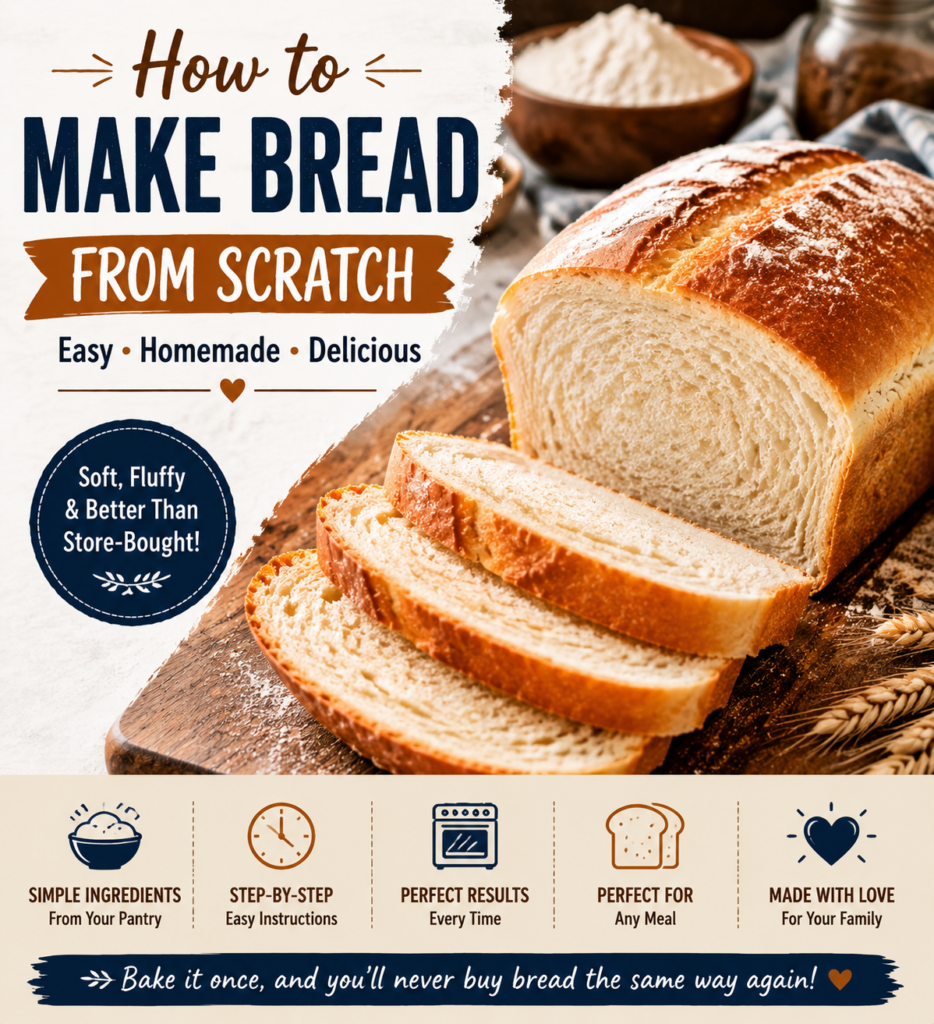
How to Make Bread From Scratch
Learning how to make bread from scratch is one of the most rewarding kitchen skills you can master. Freshly baked bread fills your home with an amazing aroma, tastes far better than most store-bought loaves, and lets you control every ingredient that goes into it. Whether you’re a beginner or an experienced home baker, this simple recipe will help you create a soft, fluffy, golden loaf with confidence.
Many people think baking bread is difficult, but the truth is that once you understand the basics, the process is surprisingly simple. This guide explains how to make bread from scratch using common pantry ingredients and easy-to-follow instructions. You’ll learn how to activate the yeast, knead the dough, proof it properly, and bake it until perfectly golden.
What makes this version special is its beginner-friendly approach. Each step includes helpful tips to improve your results and avoid common mistakes. Whether you’re making sandwiches, toast, or serving warm bread with soup, knowing how to make bread from scratch is a skill you’ll use again and again.
Recipe Overview
| Detail | Information |
|---|---|
| Recipe Name | Classic Homemade White Bread |
| Prep Time | 20 minutes |
| Rise Time | 2 hours |
| Bake Time | 30 minutes |
| Total Time | 2 hours 50 minutes |
| Servings | 12 slices |
| Calories | Approximately 170 per slice |
| Difficulty Level | Easy |
Why You’ll Love This Recipe
If you’re learning how to make bread from scratch, this recipe is a great place to begin.
- Easy enough for beginners.
- Uses simple pantry ingredients.
- Creates a soft and fluffy loaf.
- Perfect for sandwiches and toast.
- Budget-friendly compared to store-bought bread.
- Free from unnecessary preservatives.
- Easy to customize with herbs, seeds, or whole grains.
Once you learn how to make bread from scratch, you’ll enjoy fresh homemade bread whenever you want.
Ingredients
Bread Flour
Quantity: 4 cups
Purpose:
Provides strong gluten for a soft, chewy loaf.
Possible Substitutions:
- All-purpose flour
- Half bread flour and half whole wheat flour
Active Dry Yeast
Quantity: 2¼ teaspoons (1 packet)
Purpose:
Helps the dough rise and creates an airy texture.
Possible Substitutions:
- Instant yeast
- Fresh yeast
Warm Water
Quantity: 1½ cups
Purpose:
Activates the yeast.
Possible Substitutions:
- Warm milk for a softer loaf
Sugar
Quantity: 2 tablespoons
Purpose:
Feeds the yeast and adds a touch of sweetness.
Possible Substitutions:
- Honey
- Maple syrup
Salt
Quantity: 1½ teaspoons
Purpose:
Enhances flavor and strengthens gluten.
Possible Substitutions:
- Fine sea salt
- Kosher salt
Butter
Quantity: 2 tablespoons, softened
Purpose:
Adds richness and keeps the bread tender.
Possible Substitutions:
- Olive oil
- Vegetable oil
- Melted coconut oil
Equipment Needed
Before learning how to make bread from scratch, gather these tools:
- Large mixing bowl
- Measuring cups
- Measuring spoons
- Wooden spoon
- Dough scraper (optional)
- Stand mixer (optional)
- 9×5-inch loaf pan
- Kitchen towel
- Cooling rack
- Oven thermometer (recommended)
How to Make Bread From Scratch
Step 1
In a large mixing bowl, combine the warm water, sugar, and yeast.
Let the mixture rest for 5–10 minutes until it becomes foamy.
If your yeast doesn’t foam, it may no longer be active, and you’ll need to start with fresh yeast.
Step 2
Add the softened butter and salt.
Gradually stir in the bread flour, one cup at a time, until a shaggy dough forms.
Step 3
Transfer the dough to a lightly floured surface.
Knead for 8–10 minutes until the dough becomes smooth, soft, and elastic.
Proper kneading is one of the most important steps in how to make bread from scratch, as it develops the gluten needed for a light, airy loaf.
Step 4
Place the dough into a lightly greased bowl.
Cover it with a clean kitchen towel.
Let it rise in a warm place for about 1 hour, or until doubled in size.
Step 5
Gently punch down the dough to release excess air.
Shape it into a loaf and place it into a greased 9×5-inch loaf pan.
Step 6
Cover the pan again and let the dough rise for another 45–60 minutes.
The dough should rise just above the rim of the pan.
Step 7
Bake in a preheated oven at 375°F (190°C) for 30–35 minutes.
The bread should be golden brown and sound hollow when tapped on the bottom.
Step 8
Carefully remove the bread from the pan.
Allow it to cool completely on a wire rack before slicing.
Although it’s tempting to cut into warm bread immediately, cooling helps the crumb finish setting and makes slicing much easier.
By following these simple steps, you’ll quickly master how to make bread from scratch and enjoy delicious homemade bread that’s perfect for breakfast, sandwiches, toast, or serving alongside your favorite soups and stews.
Expert Tips for Best Results
If you’re learning how to make bread from scratch, these expert tips will help you bake soft, fluffy, and flavorful bread every time.
1. Use Fresh Yeast
Fresh yeast is the foundation of successful bread baking. Always check the expiration date before using it. If the yeast doesn’t foam during activation, start over with a new packet.
2. Measure Ingredients Accurately
Too much flour can make the bread dry and dense, while too little flour creates sticky dough. For the best results when learning how to make bread from scratch, use measuring cups correctly or weigh ingredients with a kitchen scale.
3. Knead Until the Dough Is Smooth
Kneading develops gluten, which gives bread its soft texture. The dough should become elastic and pass the “windowpane test,” where a small piece stretches thin without tearing.
4. Let the Dough Rise in a Warm Place
Yeast works best in a warm environment between 75°F and 85°F (24°C–29°C). Avoid placing the dough in a cold or drafty area.
5. Don’t Rush the Proofing Time
Patience is key. Allow the dough to double in size during both rises. Proper proofing creates a lighter loaf with a soft crumb.
6. Preheat the Oven
Always bake in a fully preheated oven. Consistent heat gives the bread a good oven spring and a beautiful golden crust.
7. Cool Before Slicing
Fresh bread continues to set after baking. Let it cool for at least 30–45 minutes before slicing to maintain its texture.
8. Practice Regularly
The more often you bake, the easier it becomes to recognize the perfect dough texture and proofing time.
Common Mistakes to Avoid
Avoid these common errors when learning how to make bread from scratch.
Using Expired Yeast
Inactive yeast prevents the dough from rising properly.
Water That’s Too Hot
Hot water can kill yeast. Aim for 105–110°F (40–43°C).
Adding Too Much Flour
Extra flour creates a heavy, dense loaf.
Under-Kneading
Without enough kneading, gluten doesn’t develop properly.
Over-Proofing
If the dough rises too long, it may collapse during baking.
Baking in a Cold Oven
An oven that isn’t fully preheated reduces oven spring.
Cutting Too Soon
Slicing hot bread releases steam and may create a gummy texture.
Recipe Variations
One of the best things about how to make bread from scratch is how easy it is to customize.
Healthy Version
- Replace half the bread flour with whole wheat flour.
- Add flaxseed or chia seeds.
- Reduce the sugar slightly.
Gluten-Free Version
Use a gluten-free bread flour blend that contains xanthan gum and follow the package instructions for liquid adjustments.
Dairy-Free Version
Replace butter with olive oil, avocado oil, or vegan butter.
Family-Friendly Version
Add ingredients like:
- Shredded cheddar cheese
- Garlic and herbs
- Cinnamon and raisins
- Chocolate chips for a sweet loaf
Storage Instructions
Room Temperature
Store the cooled loaf in an airtight bread bag or container for 2–3 days.
Refrigerator
Refrigeration isn’t recommended because it can make bread stale more quickly.
Freezer
Slice the bread before freezing.
Store slices in a freezer-safe bag for up to 3 months.
Thaw at room temperature or toast directly from frozen.
Reheating Instructions
Toaster
Toast slices until lightly golden and warm.
Oven
Wrap the loaf in foil and warm at 325°F (160°C) for about 10 minutes.
Microwave
Heat individual slices for 10–15 seconds to soften them before serving.
What to Serve With How to Make Bread From Scratch
Fresh homemade bread pairs well with many meals.
- Butter
- Honey
- Fruit jam
- Peanut butter
- Avocado
- Tomato soup
- Chicken noodle soup
- Beef stew
- Scrambled eggs
- Garlic butter
- Olive oil and balsamic vinegar
- Cheese platter
Nutritional Information
Approximate values per slice.
| Nutrient | Amount |
|---|---|
| Calories | 170 kcal |
| Protein | 5 g |
| Carbohydrates | 31 g |
| Fat | 3 g |
| Saturated Fat | 1.5 g |
| Fiber | 1 g |
| Sugar | 2 g |
| Sodium | 260 mg |
| Calcium | 18 mg |
| Iron | 1.6 mg |
Nutrition values are estimates and may vary based on ingredients used.
Read More About:Why Is My Bread Dense? Troubleshooting Guide & Easy Fixes
Frequently Asked Questions
1. Can I make bread from scratch without a stand mixer?
Yes. Kneading by hand works perfectly and is a great way to learn bread-making.
2. How long does homemade bread last?
It stays fresh for about 2–3 days at room temperature when stored properly.
3. Can I freeze homemade bread?
Yes. Freeze sliced bread for up to 3 months.
4. Why didn’t my bread rise?
Common reasons include expired yeast, cold proofing conditions, or water that was too hot.
5. Can I use all-purpose flour?
Yes. Bread flour produces a slightly chewier texture, but all-purpose flour also works well.
6. How do I know when the bread is fully baked?
The loaf should be golden brown and sound hollow when tapped on the bottom. An internal temperature of about 190–200°F (88–93°C) is ideal.
7. Can I make this recipe with whole wheat flour?
Yes. Replace up to half of the bread flour with whole wheat flour for a heartier loaf.
8. Why is my bread dense?
Dense bread is often caused by too much flour, inactive yeast, or insufficient kneading and proofing.
9. Can I add herbs or cheese?
Absolutely. Garlic, rosemary, thyme, cheddar, and Parmesan are all delicious additions.
10. What’s the easiest way to improve homemade bread?
Use fresh ingredients, measure accurately, proof patiently, and avoid overbaking.
Related Recipes
If you enjoyed learning how to make bread from scratch, try these recipes next:
- Easy No-Knead Artisan Bread
- Soft Homemade Dinner Rolls
- Honey Whole Wheat Bread
- Garlic Herb Bread
- Homemade Sandwich Bread
Final Thoughts
Learning how to make bread from scratch is a rewarding experience that brings fresh, delicious bread straight to your table. With simple ingredients, proper kneading, and enough time for the dough to rise, you can create a bakery-quality loaf right in your own kitchen.
Don’t worry if your first loaf isn’t perfect—bread baking improves with practice. Each loaf teaches you something new about dough texture, proofing, and baking. Before long, making homemade bread will become a relaxing and enjoyable part of your routine.
Whether you’re serving it warm with butter, using it for sandwiches, or pairing it with a comforting bowl of soup, this classic homemade bread recipe is sure to become a favorite.
<!DOCTYPE html>
<html lang="en">
<head>
<meta charset="UTF-8">
<meta name="viewport" content="width=device-width, initial-scale=1.0">
<title>How to Make Bread From Scratch - Recipe Card</title>

<style>
*{
margin:0;
padding:0;
box-sizing:border-box;
font-family:Arial,Helvetica,sans-serif;
}

body{
background:#f5f5f5;
padding:30px;
}

.recipe-card{
max-width:900px;
margin:auto;
background:#ffffff;
border-radius:18px;
overflow:hidden;
box-shadow:0 10px 25px rgba(0,0,0,.15);
}

.header{
background:linear-gradient(135deg,#C97A2B,#8B4513);
color:#fff;
text-align:center;
padding:35px;
}

.header h1{
font-size:34px;
margin-bottom:10px;
}

.header p{
font-size:18px;
}

.recipe-info{
display:grid;
grid-template-columns:repeat(auto-fit,minmax(150px,1fr));
gap:15px;
background:#fff8ef;
padding:25px;
}

.info-box{
background:#fff;
padding:18px;
border-radius:12px;
text-align:center;
box-shadow:0 2px 8px rgba(0,0,0,.08);
}

.info-box h3{
color:#8B4513;
margin-bottom:8px;
}

.section{
padding:30px;
}

.section h2{
color:#8B4513;
margin-bottom:15px;
}

.section ul,
.section ol{
padding-left:20px;
line-height:1.8;
}

.notes{
background:#fff6d5;
border-left:5px solid #C97A2B;
padding:18px;
border-radius:8px;
}

.footer{
background:#8B4513;
color:#fff;
text-align:center;
padding:25px;
}

.footer p{
margin:8px 0;
}

@media(max-width:768px){

.recipe-info{
grid-template-columns:repeat(2,1fr);
}

.header h1{
font-size:28px;
}

}
</style>

</head>

<body>

<div class="recipe-card">

<div class="header">
<h1>🍞 How to Make Bread From Scratch</h1>
<p>Soft • Fluffy • Homemade • Beginner Friendly</p>
</div>

<div class="recipe-info">

<div class="info-box">
<h3>Prep</h3>
<p>20 Minutes</p>
</div>

<div class="info-box">
<h3>Rise</h3>
<p>2 Hours</p>
</div>

<div class="info-box">
<h3>Bake</h3>
<p>30 Minutes</p>
</div>

<div class="info-box">
<h3>Total</h3>
<p>2 Hr 50 Min</p>
</div>

<div class="info-box">
<h3>Servings</h3>
<p>12 Slices</p>
</div>

<div class="info-box">
<h3>Calories</h3>
<p>170 kcal</p>
</div>

</div>

<div class="section">

<h2>Ingredients</h2>

<ul>
<li>4 cups bread flour</li>
<li>2¼ tsp active dry yeast</li>
<li>1½ cups warm water</li>
<li>2 tbsp sugar</li>
<li>1½ tsp salt</li>
<li>2 tbsp softened butter</li>
</ul>

</div>

<div class="section">

<h2>Instructions</h2>

<ol>
<li>Activate yeast with warm water and sugar for 5–10 minutes.</li>
<li>Mix in butter, salt, and flour until a dough forms.</li>
<li>Knead for 8–10 minutes until smooth and elastic.</li>
<li>Let the dough rise until doubled in size.</li>
<li>Shape into a loaf and place in a greased loaf pan.</li>
<li>Allow a second rise for 45–60 minutes.</li>
<li>Bake at 375°F (190°C) for 30–35 minutes.</li>
<li>Cool completely before slicing and serving.</li>
</ol>

</div>

<div class="section">

<h2>Notes</h2>

<div class="notes">

<ul>
<li>Always use fresh yeast.</li>
<li>Measure flour accurately.</li>
<li>Don't skip the proofing time.</li>
<li>Cool before slicing.</li>
<li>Freeze sliced bread for up to 3 months.</li>
</ul>

</div>

</div>

<div class="footer">

<h3>Quick Recipe Summary</h3>

<p><strong>Recipe:</strong> How to Make Bread From Scratch</p>

<p><strong>Prep:</strong> 20 Minutes |
<strong>Rise:</strong> 2 Hours |
<strong>Bake:</strong> 30 Minutes</p>

<p><strong>Total:</strong> 2 Hours 50 Minutes |
<strong>Servings:</strong> 12 |
<strong>Calories:</strong> 170 kcal</p>

<p>🥖 Fresh homemade bread that's soft, fluffy, and perfect for sandwiches, toast, or serving with soup.</p>

</div>

</div>

</body>
</html>